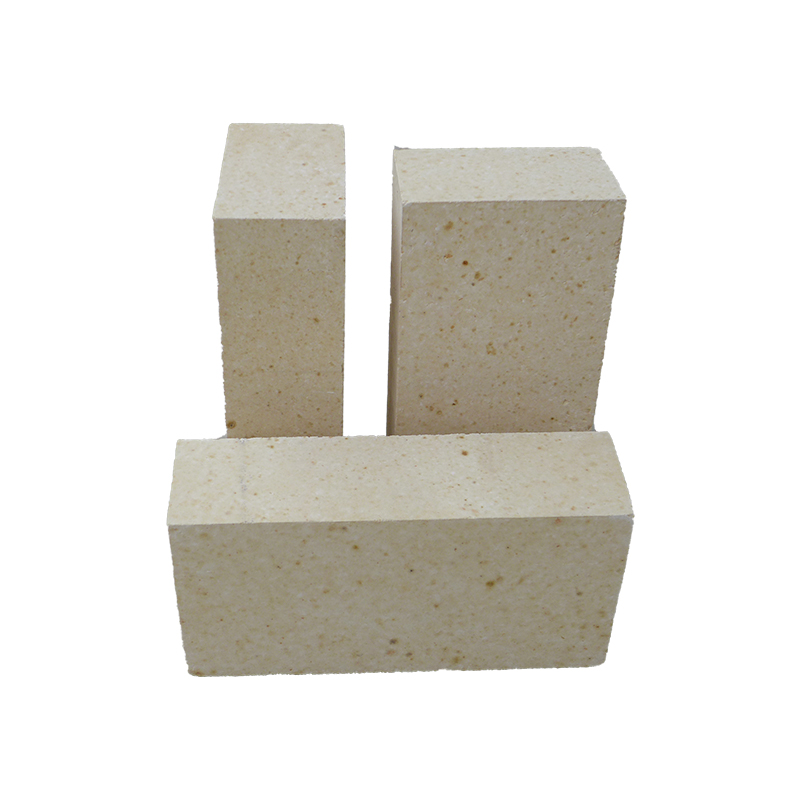
High-Quality Silicon Refractory Castable for Industrial Applications

By:Admin on 2026-03-26 02:07:30

Certainly! Please provide the news content about Silicon Refractory Castable and the company introduction you'd like me to incorporate, and I'll create the 800-word news article for you.

Read More

Heat Resistant Bricks for Fireplaces: Durable and Safe Fire Brick Solutions

By:Admin on 2026-03-23 02:22:48

**Advancements in Heat Resistant Bricks for Fireplaces: Enhancing Safety and Efficiency**In the realm of home heating and fireplace construction, the use of heat resistant bricks has emerged as a critical factor in ensuring both safety and durability. Recent developments in refractory materials have led to improved heat resistant bricks that significantly enhance the performance and longevity of fireplaces. These advancements promise homeowners increased efficiency, reduced maintenance, and greater peace of mind when installing or upgrading their fireplaces.**The Importance of Heat Resistant Bricks in Fireplaces**Fireplaces are a central feature in many homes, providing warmth and ambiance especially during colder months. However, the intense heat generated by a fireplace demands materials that can withstand extreme temperatures without degrading or posing fire hazards. Heat resistant bricks, often referred to as refractory bricks, are engineered to endure high thermal loads while maintaining structural integrity.Unlike regular bricks, which may crack or deteriorate under heat stress, heat resistant bricks are manufactured from specific clay compositions and reinforced with additives that enable them to resist temperatures often exceeding 1,400 degrees Celsius. This quality makes them indispensable in the construction of fireplaces, wood-fired ovens, furnaces, and other high-temperature applications.**Recent Innovations in Heat Resistant Brick Technology**Traditionally, refractory bricks have been categorized by their chemical composition—such as fireclay, silica, and alumina bricks—each offering varying degrees of heat resistance and mechanical strength. Advances in material science have introduced new formulations that improve not only heat resistance but also insulation properties and resistance to thermal shock.One significant innovation is the development of lightweight heat resistant bricks. These bricks reduce the overall weight of the fireplace structure, making installation easier and decreasing the load on building foundations. Additionally, lightweight bricks often provide superior insulation, which helps retain heat within the fireplace and improves fuel efficiency.Another breakthrough is the enhanced modular design of heat resistant bricks, allowing for easier assembly and repair. Modular refractory bricks can be replaced individually without dismantling the entire fireplace structure, offering a cost-effective solution for maintenance and extending the functional lifespan of fireplaces.**Benefits to Homeowners and Industry Professionals**For homeowners, upgrading to advanced heat resistant bricks translates into a safer living environment. These bricks minimize the risk of fire incidents by effectively containing heat and preventing structural damage. Their durability means fewer repairs over time, reducing long-term maintenance costs.For fireplace manufacturers and builders, these innovations provide the opportunity to design more efficient and environmentally friendly heating solutions. Improved insulation reduces heat loss, enabling fireplaces to consume less fuel and produce fewer emissions. This aligns with global efforts to enhance energy efficiency and reduce carbon footprints.**Company Introduction**[Company Name] is a leading manufacturer specializing in high-quality refractory materials, including heat resistant bricks designed specifically for fireplace applications. With over two decades of experience in the industry, the company has consistently focused on innovating products that meet stringent safety standards and performance requirements.Committed to research and development, [Company Name] collaborates with material scientists and engineers to create bricks that combine durability, thermal efficiency, and environmental responsibility. The company’s state-of-the-art production facilities employ advanced kiln technologies to ensure the consistent quality of each brick.Beyond product excellence, [Company Name] prides itself on customer service and technical support. Their expert team advises builders, architects, and homeowners on selecting the appropriate refractory solutions tailored to specific applications and regional building codes. This comprehensive approach ensures that projects involving fireplaces are executed smoothly and safely.**Looking Ahead: The Future of Fireplace Technology**As the demand for efficient and sustainable home heating solutions grows, the role of heat resistant bricks becomes ever more crucial. Continued innovation in materials and design is expected to yield bricks that not only withstand higher temperatures but also incorporate eco-friendly components and manufacturing processes.Emerging trends include integrating smart sensors within refractory bricks to monitor temperature and structural health in real-time. Such technologies could alert homeowners to potential issues before they escalate, further enhancing fireplace safety.In conclusion, the advancements in heat resistant bricks represent a significant step forward in fireplace technology. By combining superior materials, thoughtful design, and expert manufacturing, these bricks provide a foundation for safer, more efficient, and longer-lasting fireplaces. Both homeowners and industry professionals stand to benefit from these developments, making the future of home heating brighter and more secure.

Read More

Hydraulic Calcium Aluminate Cements: Key Features and Applications

By:Admin on 2026-03-19 02:00:33

**Innovative Advances in Hydraulic Calcium Aluminate Cements Boost Construction Industry**In recent developments within the construction materials sector, Hydraulic Calcium Aluminate Cements (HCAC) have garnered significant attention for their remarkable properties and diverse applications. As the industry strives for more durable, efficient, and sustainable building materials, HCACs are emerging as a crucial component in modern construction, offering enhanced performance in challenging environments.Hydraulic Calcium Aluminate Cements are specialized cements characterized by their rapid setting times, high early strength, and superior resistance to chemical attack and high temperatures. Unlike ordinary Portland cements, HCACs primarily consist of calcium aluminate compounds, which impart unique hydraulic properties that make them especially suitable for refractory applications, wastewater treatment plants, and high-performance concrete mixes.One of the key advantages of HCAC is its rapid hardening capability. This feature allows construction projects to progress more swiftly, reducing downtime and enabling faster formwork removal. Additionally, HCACs exhibit excellent durability in aggressive environments, such as exposure to sulfates, acids, and high-temperature conditions, where traditional cement types often fail or deteriorate prematurely.The use of Hydraulic Calcium Aluminate Cements is particularly advantageous in infrastructure projects requiring high resistance to chemical attack, including sewage treatment plants, marine structures, and industrial floors. Moreover, HCACs contribute significantly to refractory concretes used in furnaces, kilns, and incinerators owing to their high heat tolerance.As the demand for sustainable construction materials grows, HCACs also offer potential environmental benefits. Their rapid strength development reduces curing times and energy consumption at construction sites. Furthermore, certain formulations of calcium aluminate cement can incorporate industrial byproducts, promoting recycling and minimizing waste.Against this backdrop, companies specializing in advanced cement technologies are pioneering innovations in HCAC formulations and applications. These firms focus on optimizing cement composition to enhance performance parameters such as setting time, mechanical strength, and chemical resistance, thereby catering to the evolving needs of the construction industry.While global interest in Hydraulic Calcium Aluminate Cements continues to rise, manufacturers and developers are committed to continued research and development. Efforts are underway to improve scalability, cost-effectiveness, and environmental footprint of HCAC production processes. Furthermore, robust technical support and tailored product solutions are enabling broader adoption across various sectors.In conclusion, Hydraulic Calcium Aluminate Cements represent a significant advancement in construction materials, combining rapid strength gain with exceptional durability and resistance to harsh conditions. As infrastructure demands grow more complex and sustainability becomes paramount, the role of HCACs is set to expand, driving innovation and efficiency in future construction projects. Industry stakeholders are encouraged to explore HCAC technologies to leverage their unique benefits for long-lasting and resilient building solutions.

Read More